Fentanyl and Opiate Toxicology in Emergency Department Overdoses
Tests for opiate toxicology do not detect synthetic opioids, such as fentanyl, and so fentanyl must be tested separately. Fentanyl-related overdoses have risen in the U.S., and often, patients may not know they are ingesting fentanyl as many substances sold as other drugs have been found to contain fentanyl. Toxicology screenings for overdose patients in the ED can provide opportunities for treatment, patient education, and additional data for public health to inform prevention and treatment options for trends in substance use.
Data
Testing/Positivity Rate
Q1 2026
Quarterly rates of opiate and fentanyl toxicology screening and positivity for overdose patients presenting to the emergency department.
Metric Definitions
- Overdose Emergency Encounter
- An Emergency Encounter with an encounter or billing diagnosis mapped to one of the following ICD-10-CM code patterns: T36.9*, T37.9*, T39.9*, T41.4*, T42.7*, T43.9*, T45.9*, T47.9*, or T49.9* with the second digit following the decimal place of 1, 2, or 4; or T36*, T37*, T38*, T39*, T40*, T41*, T42*, T43*, T44*, T45*, T46*, T47*, T48*, T49*, or T50* with a third and fourth digits after the decimal place of 1A, 2A, or 4A.
- Fentanyl Tests
- Lab components mapped to LOINC code 11235-9, 40839-3, 43199-9, 43200-5, 58379-9, 59673-4, 66129-8, 74810-3, or 95797-7.
- Opioid Tests
- Lab components mapped to LOINC code 8221-4, 8222-2, 18390-5, 19295-5, 21431-2, 3879-4, 70151-6.
Related Articles
 Expand
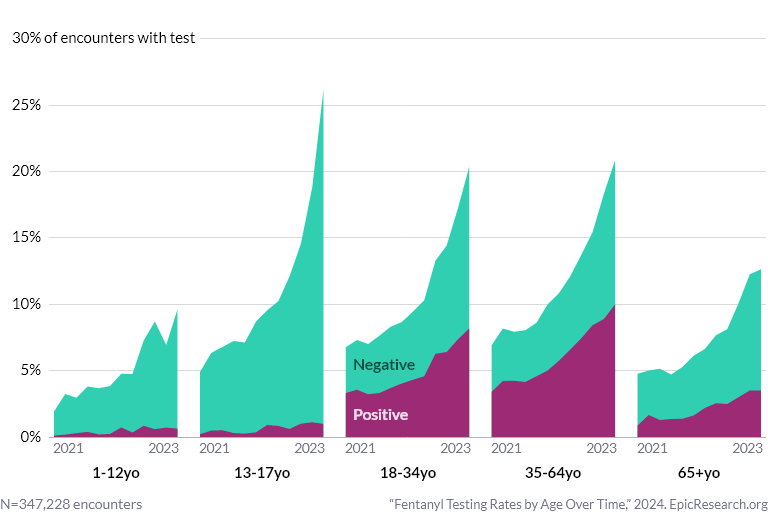
Fentanyl Toxicology Testing Rates Increased Most for Adolescents and for Patients in Urban Areas Since 2021
Fentanyl toxicology testing in overdose ED encounters has more than tripled for most age groups since 2021. Patients aged 13 to 17 experienced the greatest increase in testing rates, going from 5% of encounters to 26% of encounters.
 Expand
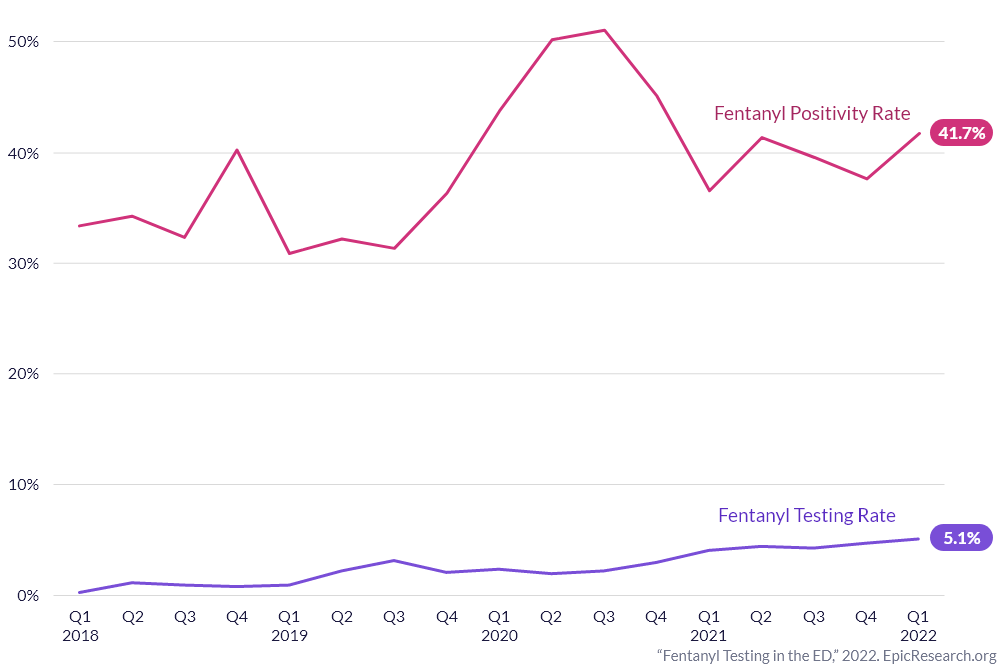
Only 5% of Overdose Patients Tested for Fentanyl, #1 Killer of Americans 18-45
While standard toxicology screenings test for opiates, chemicals extracted from natural sources such as morphine (an indicator of heroin use), most of these screenings do not detect fentanyl, a synthetic opioid. Patients who are treated in the emergency department for overdoses are tested for fentanyl in only 5% of cases, and fentanyl is detected in almost 50% of these tests. As overdose deaths from synthetic opioids were 18 times more likely in 2020 than in 2013, updating screening protocols to include fentanyl testing would be prudent.
 Expand
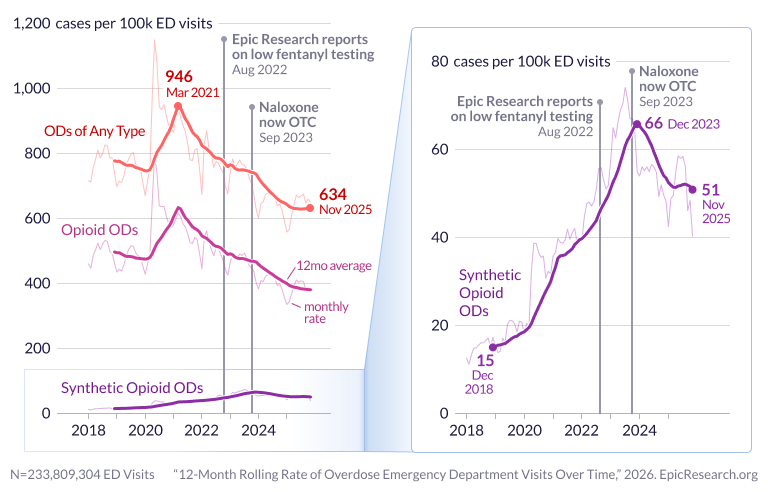
Fentanyl Testing Associated with Short-Term Survival Benefits; Increased Long-Term Mortality Risk Among Overdose Patients
The 12-month average rate of emergency department (ED) visits for overdoses of all types declined from a peak of 946 per 100,000 ED visits in March 2021 to 634 per 100,000 ED visits in November 2025, falling below pre-COVID-19 pandemic levels. Testing for fentanyl in these encounters more than quadrupled over this period, from 5% of encounters to 28% of encounters.
