Epic Research is not viewable using Internet Explorer. Please try accessing it with an alternate browser.
Cosmos Study

Better BMI Associated with Better Diabetic Control

Abstract: For patients with diabetes, incremental improvements in BMI are associated with better A1C levels 12 months after diagnosis. 
August 11, 2021
Dual-Team Study
Team A:Joel Jones, RPhAdrianna Teriakidis, PhD Ryan Bohochik
Team B:Dave Little, MDEric Barkley

More than 32 million Americans have type 2 diabetes, with an estimated 1.8 million new cases diagnosed
each year. An elevated BMI is a known risk factor for the development of type 2 diabetes. We investigated
whether a patient’s BMI was associated with greater diabetic control, as indicated by an A1C of less than 7%
one year from initial diagnosis.

Our data show that as BMI increases, diabetic control decreases. However, a patient doesn’t have to have a
normal BMI to benefit; even patients who are overweight (BMI 25-30) were 25% more likely than patients
who are obese to have diabetic control.
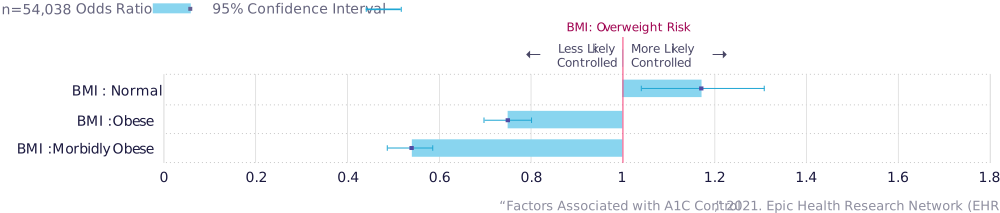
Figure 1
Body Mass Index (BMI) and A1C Control
Figure 1. BMI levels and their association with A1C control by the end of the patient’s first year after being diagnosed with type 2 diabetes.

These findings suggest that improved diabetic control can be seen even with stepwise decreases to patient
BMI for newly diagnosed type 2 diabetics. This is encouraging for those who might feel overwhelmed by the
need to lose a certain amount of weight. Even those with an overweight BMI (25-30) have an increased
likelihood of having their diabetes well controlled.


These data come from Cosmos, a HIPAA Limited Data Set of more than 113 million patients from Epic customers. This study was completed by two teams, comprised of clinicians and data scientists, that independently acquired and analyzed data. Overall, the two teams came to similar conclusions. Data are pooled from 99 healthcare organizations representing 496 hospitals that span 48 states and 69 million patients who have had at least one face-to-face encounter since 2017. 

Original Publication Date: August 11, 2021
Last Updated: August 20, 2021