
On July 17, we published an update to this article that found that the number of cancer screenings has begun to rise, but has not yet reached historical levels.
EHR data show a recent abrupt drop – between 86% and 94% – in preventive cancer screenings performed across the United States, presumably due to access disruptions caused by COVID-19. This study compares the number of screenings for cervical, colon, and breast cancer completed each week in 2020 to the average number of screenings completed during equivalent weeks from 2017–2019. The data set includes 2.7 million patient records from 39 organizations that represent 190 hospitals spanning 23 states. The sample for this analysis is restricted to patients who had at least one encounter in each of the years 2017, 2018, and 2019.
If the trend continues, the data suggest that many cancer cases could go undiagnosed or be diagnosed at a later stage with a poorer prognosis. Provider organizations that must postpone in-person screenings might wish to explore alternative options to get patients caught up, such as the use of at-home stool-based tests for colon cancer screening or expanding hours for mammography when imaging centers reopen.
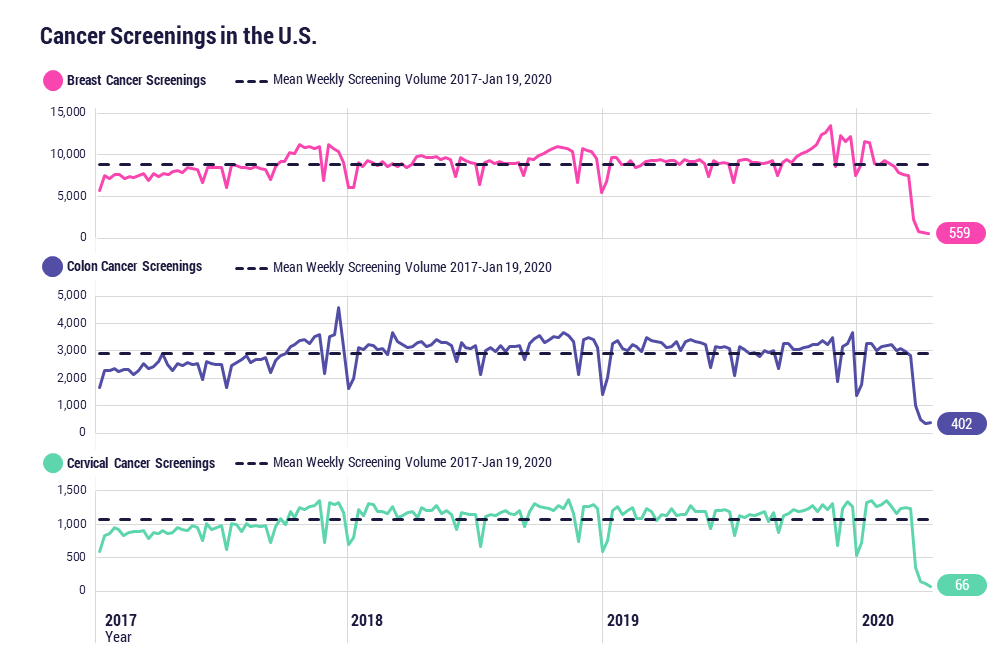
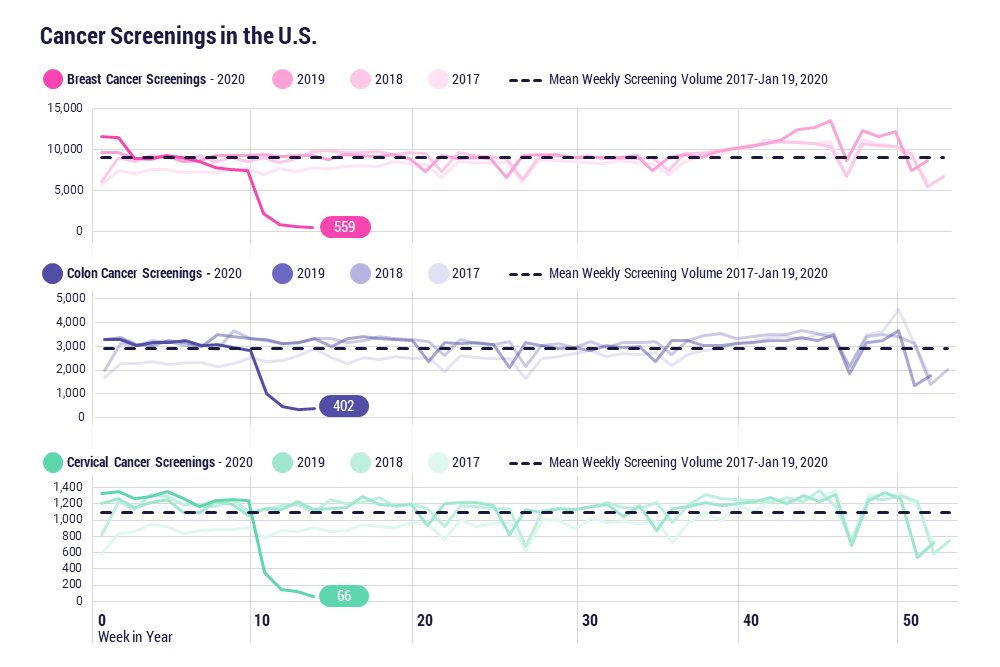
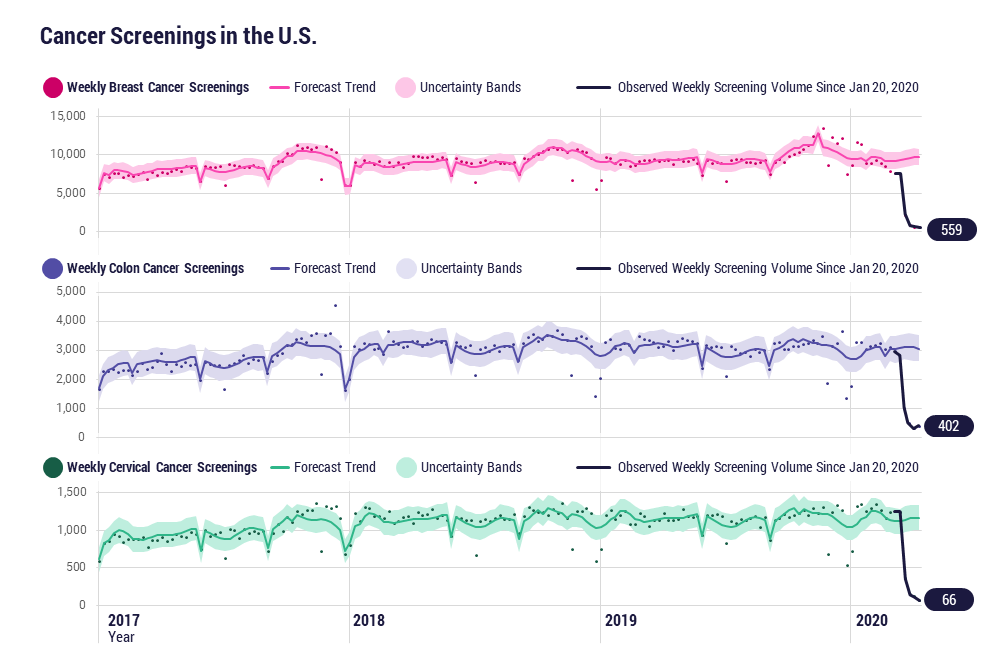
An earlier version of Figure 2 accidentally omitted week 1 data for 2019 breast cancer screenings, which caused all subsequent values to be shifted.


