


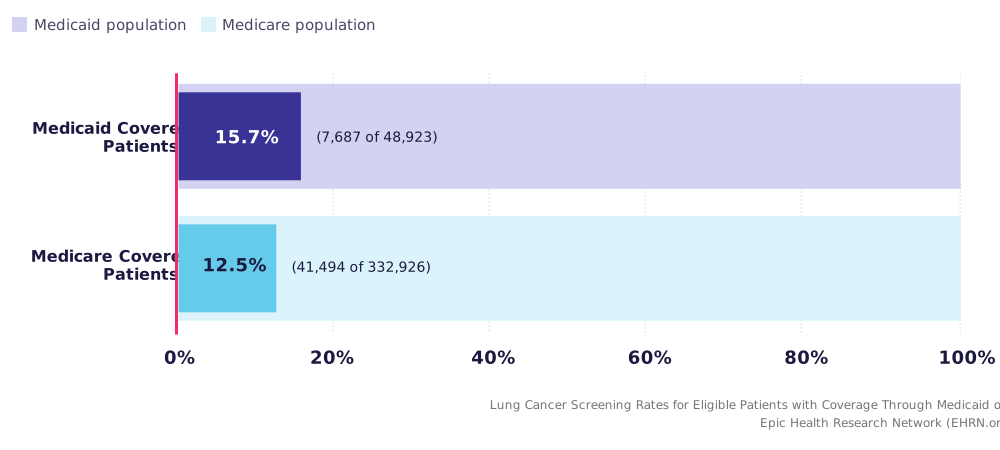
The U.S. Preventive Services Task Force (USPSTF) recommends that patients eligible for lung cancer screening receive a low-dose CT scan to screen for lung cancer each year.1 Our study includes 381,849 patients eligible for lung cancer screening per USPSTF guidelines who have insurance coverage for a CT lung cancer screening through Medicaid or Medicare. We found 87.1% of eligible patients were not screened, despite having insurance coverage. We did not see large variability between Medicaid and Medicare screening rates as shown in Figure 1.
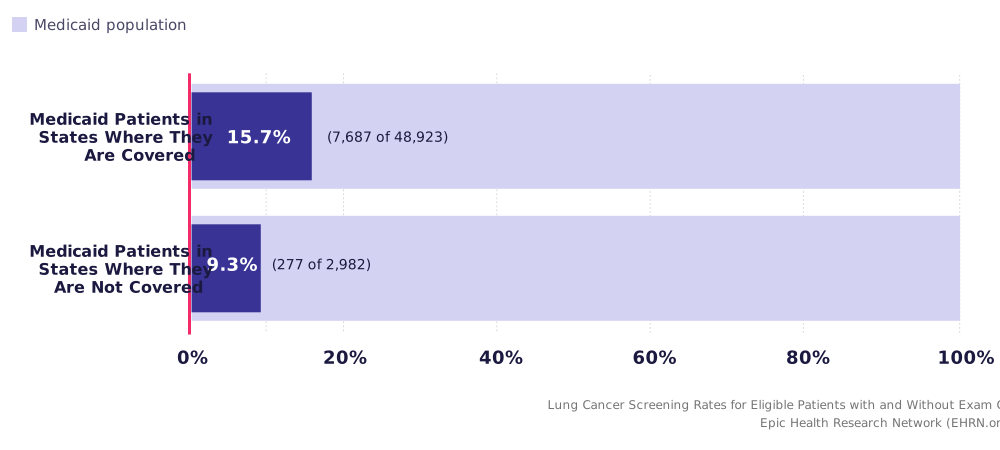
With such low rates of lung cancer screening, we wondered how insurance coverage affects screening rates. We analyzed screening rates for eligible Medicaid patients in states where lung cancer screenings are covered and compared them to patients with Medicaid in states where these screenings are not covered.2 Patients whose insurance covered the procedure had modestly higher screening rates (15.7% vs. 9.3%).
In our data, 42% of current smokers and 53% of former smokers did not have a documented pack-year history, which means we were unable to confirm their eligibility for lung cancer screening. Patients without a documented pack-year history were excluded from our screening rate results but may also be eligible for screening.
Our findings suggest that while insurance coverage is a factor in screening rates for lung cancer, it is not the only factor preventing eligible populations from being screened. Patients with a current or prior smoking history need to have their pack-year history documented so their eligibility for lung cancer screening can be assessed. Patients eligible for lung cancer screening may not be aware of their eligibility and whether the screening CT exam is covered by their insurance.
