


Gabapentin is a non-opioid medication used to treat chronic pain conditions, including shingles and diabetic neuropathy.1 It is also used for other medical conditions, including seizures, restless legs syndrome, and anxiety. Recently, gabapentin was recommended as part of surgical recovery protocols to reduce opioid use while maintaining satisfactory post-operative pain control.2
A previous study found that use of gabapentin and opioids together may increase the risk of opioid-related overdose,3 while another study found an increased risk of mortality for patients prescribed both gabapentin and opioids compared to those only prescribed opioids.4 However, there is little known about the prevalence of OUD in patients who are prescribed both gabapentin and opioids.
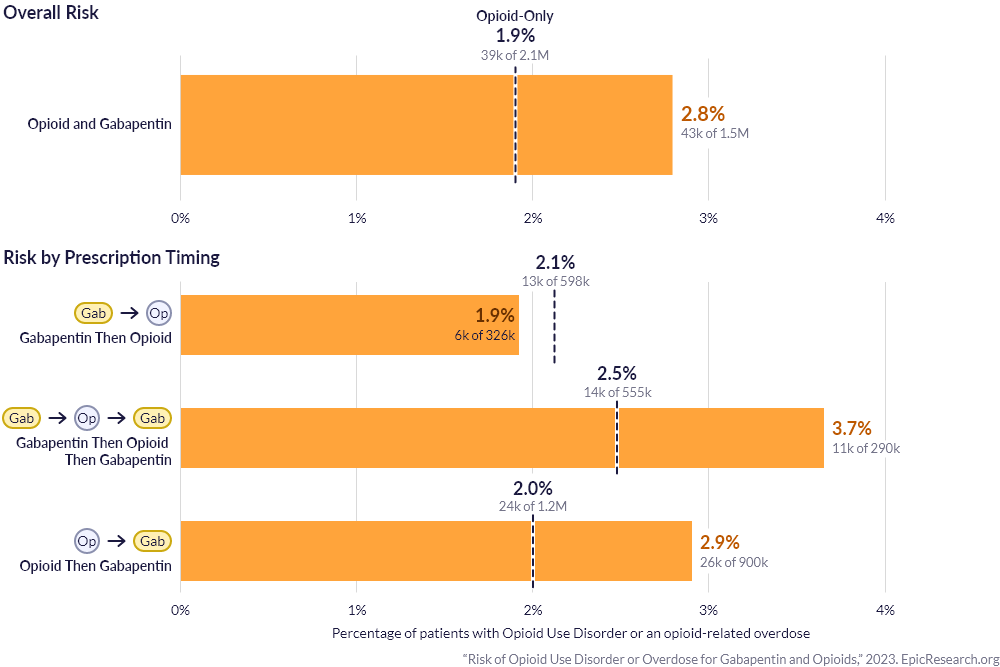
To better understand how use of gabapentin and opioids may influence a patient’s risk of developing opioid-related conditions, we matched 1.5 million patients with both gabapentin and opioid prescriptions to 2.1 million patients with only opioid prescriptions and evaluated their likelihood of being diagnosed with OUD or having an opioid-related overdose. Patients were matched by prescribed opioid amount, age, at least one shared comorbidity, and length of time in the observation period.
We found that patients taking gabapentin in combination with opioids are 47% more likely to develop OUD or experience an opioid-related overdose than patients who are solely prescribed opioids, as shown in Figure 1. While we observed slight differences in risk based on which comorbidities a patient has, an increased risk is seen across all comorbid factors assessed.
To further evaluate whether gabapentin and opioid prescribing timing influenced risk, we compared patients who had gabapentin prescriptions only before, only after, or both before and after their opioid prescription. We found that the greatest risk of OUD or opioid overdose is seen in patients who had gabapentin prescribed both before and after their opioid prescription.
These findings add to the previous literature on the increased risk of opioid-related conditions with concomitant use of gabapentin and opioids.2,3 While we did match patients on several characteristics, we did not study all potential factors that might contribute to the increased risk, such as level of pain control or social vulnerability index.
Original Publication Date: April 4, 2023
Last Updated: April 7, 2023
