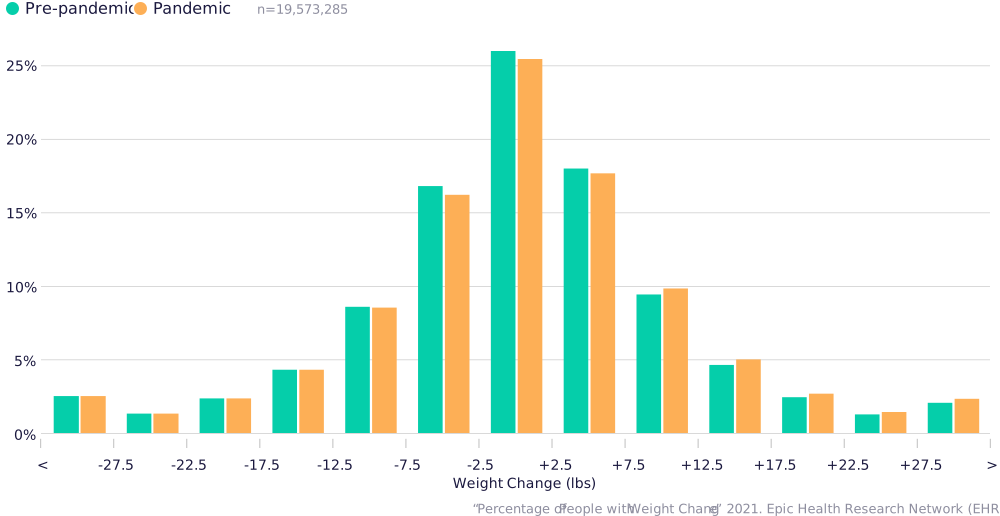
While a survey1 and a study2 have reported an increase in patient weight during the COVID-19 pandemic, it is not widely known whether this trend was seen across the population. We evaluated weight change for adults during the pandemic compared to weight change for adults in the year prior to the pandemic. A weight loss or gain of 2.5 pounds, which we define as a normal fluctuation or “no change,” was most common, both pre-pandemic and during the pandemic. Nearly as many patients lost weight (35%) as gained weight (39%) during the pandemic.
Figure 1
Percentage of People with Weight Change
Figure 1. Weight change one year before the pandemic (in green) compared to weight change during the pandemic (in orange).
We defined weight change as the difference between the most recent recorded weight during the measurement period and the most recent recorded weight in the year prior to the measurement period. For example, if a patient had a recorded weight of 168 pounds during the pandemic baseline period and a recorded weight of 170 pounds during the pandemic period, their pandemic weight change would be +2 pounds and represented in the -2.5 to 2.5 pounds (orange) bar.
Figure 2
Weight Change Measurement Time Periods
Figure 2: Pandemic weight is the most recent weight taken between April 13, 2020 and March 13, 2021. That weight was compared to the pandemic baseline weight, which is the most recent weight taken in the year leading up to the pandemic (March 14, 2019 to March 13, 2020). Pre-pandemic weight is the most recent weight taken between April 13, 2019 and March 13, 2020. That weight was compared to the pre-pandemic baseline weight, which is the most recent weight taken in the year leading up to the pre-pandemic period (March 14, 2018 to March 13, 2019).
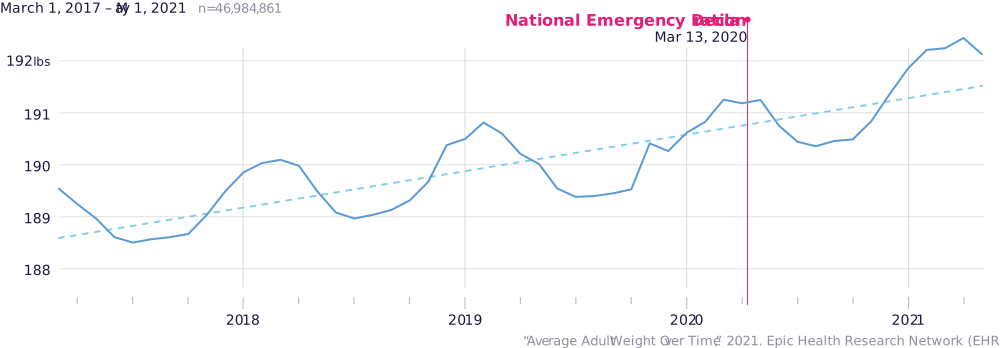
The average adult weight over time has increased, as shown in Figure 3. The slight increase in the average adult weight during the pandemic period of less than one pound is consistent with the previous trend. Weight change patterns were similar regardless of age and sex.
Figure 3
Average Adult Weight Over Time
Figure 3. Average weight for patients 19 and older from March 1, 2017 to May 1, 2021.
These data come from Cosmos, a HIPAA Limited Data Set of more than 111 million patients from Epic customers. This study was completed by two teams, each comprised of a clinician and a research scientist, who worked independently. The two teams came to similar conclusions. Data are pooled from 128 healthcare organizations representing 640 hospitals that span 49 states and cover 19,573,285 patients. This includes 15,663,833 patients in the year prior to the pandemic and 14,922,615 patients over the course of the pandemic.
References
Slightly More Than 6 in 10 U.S. Adults (61%) Report Undesired Weight Change Since Start of Pandemic. American Psychological Association. https://www.apa.org/news/press/releases/stress/2021/march-weight-change. Published March 11, 2021. Accessed June 1, 2021.
Lin AL, Vittinghoff E, Olgin JE, Pletcher MJ, Marcus GM. Body Weight Changes During Pandemic-Related Shelter-in-Place in a Longitudinal Cohort Study. JAMA Network Open. doi:10.1001/jamanetworkopen.2021.2536. Published March 22, 2021. Accessed June 1, 2021.