Epic Research is not viewable using Internet Explorer. Please try accessing it with an alternate browser.
Cosmos Study

Pediatric Suicide-Related Hospital Encounters for 13- to 15-Year-Olds Up 60% Since 2017

Abstract: Suicide attempts and self-harm are on the rise, with 13- to 15-year-olds and girls most at risk
April 22, 2022
Dual-Team Study
Team A:Dave Little, MDEric Barkley
Team B:Jeff Trinkl, MDJohnston Thayer, RNNeil Sandberg

Key Findings

  • Pediatric suicide and self-harm attempts are on the rise, especially for 13- to 15-year-olds and females.
  • Universal screenings, patient safety plans, and provider facilitation of family communication can help address the mental health concerns that have led to this increase.

Suicide is the second leading cause of death in the U.S. for 10- to 17-year-olds,1 and the youth suicide rate increased 56% between 2007 and 2017.2 Our data show that this trend has continued through 2021 as pediatric suicide and self-harm encounters in the emergency department and hospital increased for all age groups.

From 2017 to 2021, the rate of suicide or self-harm related encounters increased by 30% across 10- to 18-year-olds – from 13.7 encounters per 10,000 patients to 17.8 per 10,000. For 13- to 15-year-olds, that rate increased 60% over the same period. Females accounted for more than three times the rate when compared to male 13- to 15-year-olds, which is consistent with other data.3,4,5
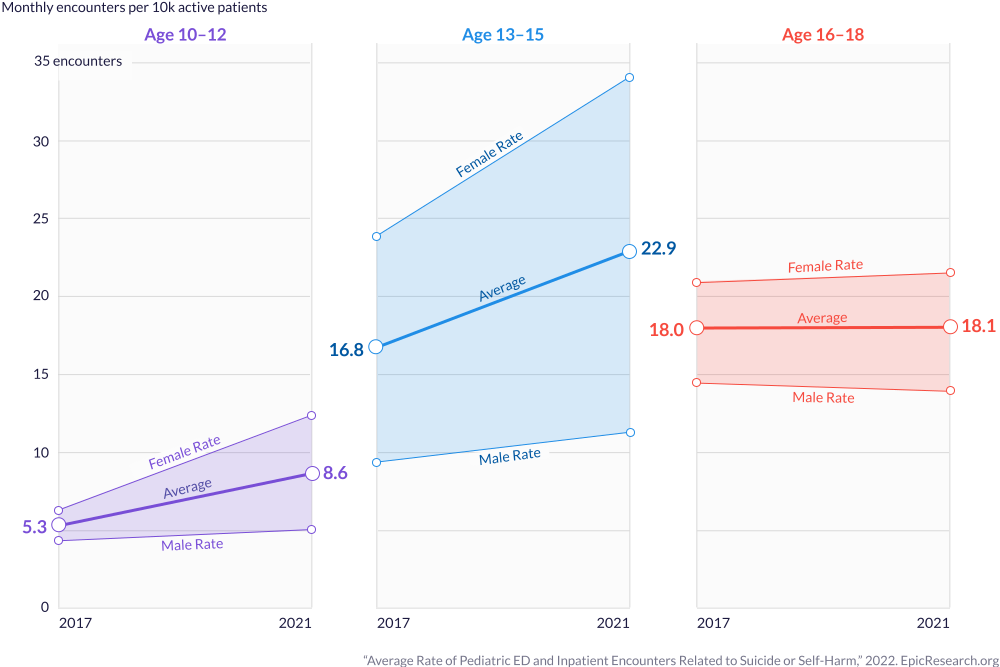
Figure 1
Average Rate of Pediatric ED and Inpatient Encounters Related to Suicide or Self-Harm
Figure 1. Suicide-and self-harm-related encounters have increased in the past five years. Children ages 13-15 have a higher risk, and females in this age group are three times more likely to attempt or ideate suicide or self-harm compared to males.

According to Michael Kane, MD, a child and adolescent psychiatrist at the University of North Carolina Healthcare System, unfortunately, these findings are not surprising. The isolation and lack of typical school supports during the pandemic likely contributed to the increase in mental health crises. However, several best practices are available to better support adolescent mental health.

Universal screening for pediatric mental health across disciplines is vital to early identification and prevention, as well as connecting patients and their families to appropriate behavioral health resources.6 Pediatric clinicians can also facilitate family discussions through the HELP mnemonic established by the American Academy of Pediatrics Task Force on Mental Health.6 Mental health providers should work with struggling patients, their families, and their clinicians to develop a patient safety plan prior to a crisis, which can help mitigate the risk of self-harm or suicide attempts.7


Cosmos is a HIPAA-Limited Data Set of more than 138 million patients from 161 Epic organizations including 960 hospitals and 20,814 clinics, serving patients in all 50 states. This study was completed by two teams, composed of clinicians and data scientists, that independently acquired and analyzed data. Both teams were involved in the interpretation of results and drafting of this brief. Overall, the two teams came to similar conclusions.

References

  1. CDC. WISQARS Injury Data. https://www.cdc.gov/injury/wisqars/index.html.
  2. Curtin, SC. State suicide rates among adolescents and young adults aged 10–24: United States, 2000–2018. National Vital Statistics Reports, 69(11). Hyattsville, MD: National Center for Health Statistics. 2020.
  3. Yard E, Radhakrishnan L, Ballesteros MF, et al. Emergency Department Visits for Suspected Suicide Attempts Among Persons Aged 12–25 Years Before and During the COVID-19 Pandemic — United States, January 2019–May 2021. MMWR Morb Mortal Wkly Rep. 2021;70:888–894. doi: 10.15585/mmwr.mm7024e1
  4. Ruch DA, Sheftall AH, Schlagbaum P, Rausch J, Campo JV, Bridge JA. Trends in Suicide Among Youth Aged 10 to 19 Years in the United States, 1975 to 2016. JAMA Netw Open. 2019;2(5):e193886. doi: 10.1001/jamanetworkopen.2019.3886
  5. Ridout KK, Alavi M, Ridout SJ, et al. Emergency Department Encounters Among Youth with Suicidal Thoughts or Behaviors During the COVID-19 Pandemic. JAMA Psychiatry. Published online September 1, 2021. doi: 10.1001/jamapsychiatry.2021.2457
  6. Foy J M, Green, C M, Earls M F, et al. Mental Health Competencies for Pediatric Practice. Pediatrics. 2019;144(5). doi: 10.1542/peds.2019-2757
  7. Stanley-Brown Safety Planning Intervention. https://suicidesafetyplan.com/ Accessed March 29, 2022.