


Underlying medical conditions associated with high risk for severe COVID-19 are outlined by the CDC.1 In this study, we quantify how certain comorbidities could affect the risk of a breakthrough COVID-19 case, defined as getting a COVID-19 infection after being fully vaccinated.
To evaluate the impact of each comorbidity on breakthrough COVID-19 rates, we compared fully vaccinated patients from similar communities by creating case and control pairs of vaccinated patients from the same state and primary care organization. In each pair, the control patient had the same comorbidity groups as the case patient except for the comorbidity of interest. For example, to assess the impact of Down syndrome, we evaluated a case patient with both Down syndrome and liver disease and compared that to a control patient with only liver disease.
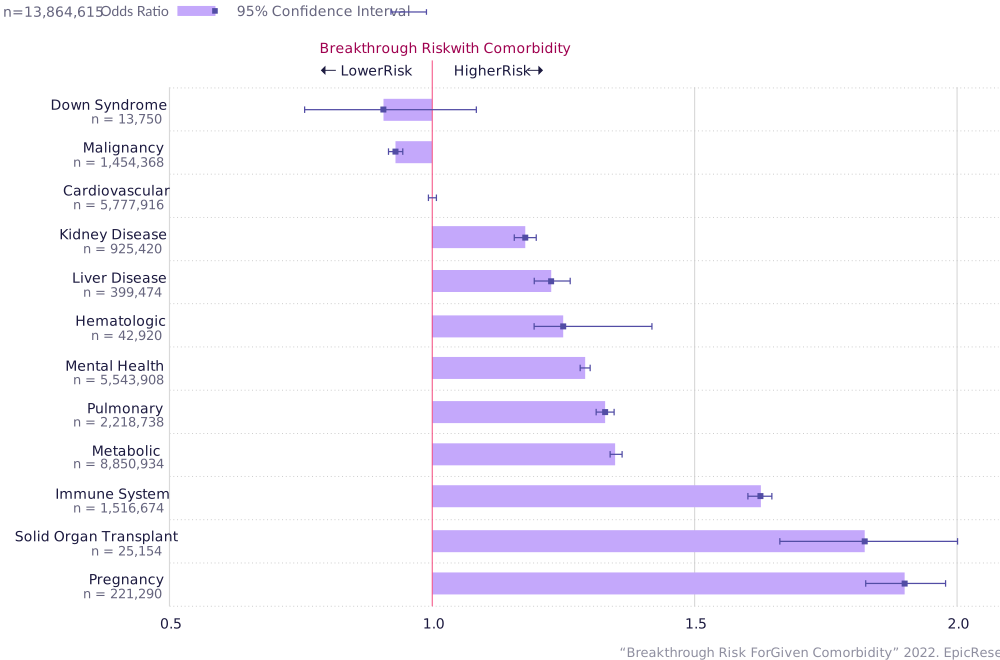
We found that many of the comorbidity groups are at a higher risk of a breakthrough infection. Notably, pregnant individuals are 1.91 times as likely to have a breakthrough infection, individuals with a solid organ transplant are 1.83 times as likely, and individuals with an immune system deficiency are 1.63 times as likely.
However, in our study, we did not find that cancer or Down syndrome increased the risk of a breakthrough infection. This is consistent with other research on the rates of COVID-19 in populations with cancer versus populations without.2
These findings support the CDC’s recommendation that patients with a high-risk comorbidity may need to use enhanced infection prevention control beyond vaccination to minimize the risk of a COVID-19 breakthrough infection.3
